
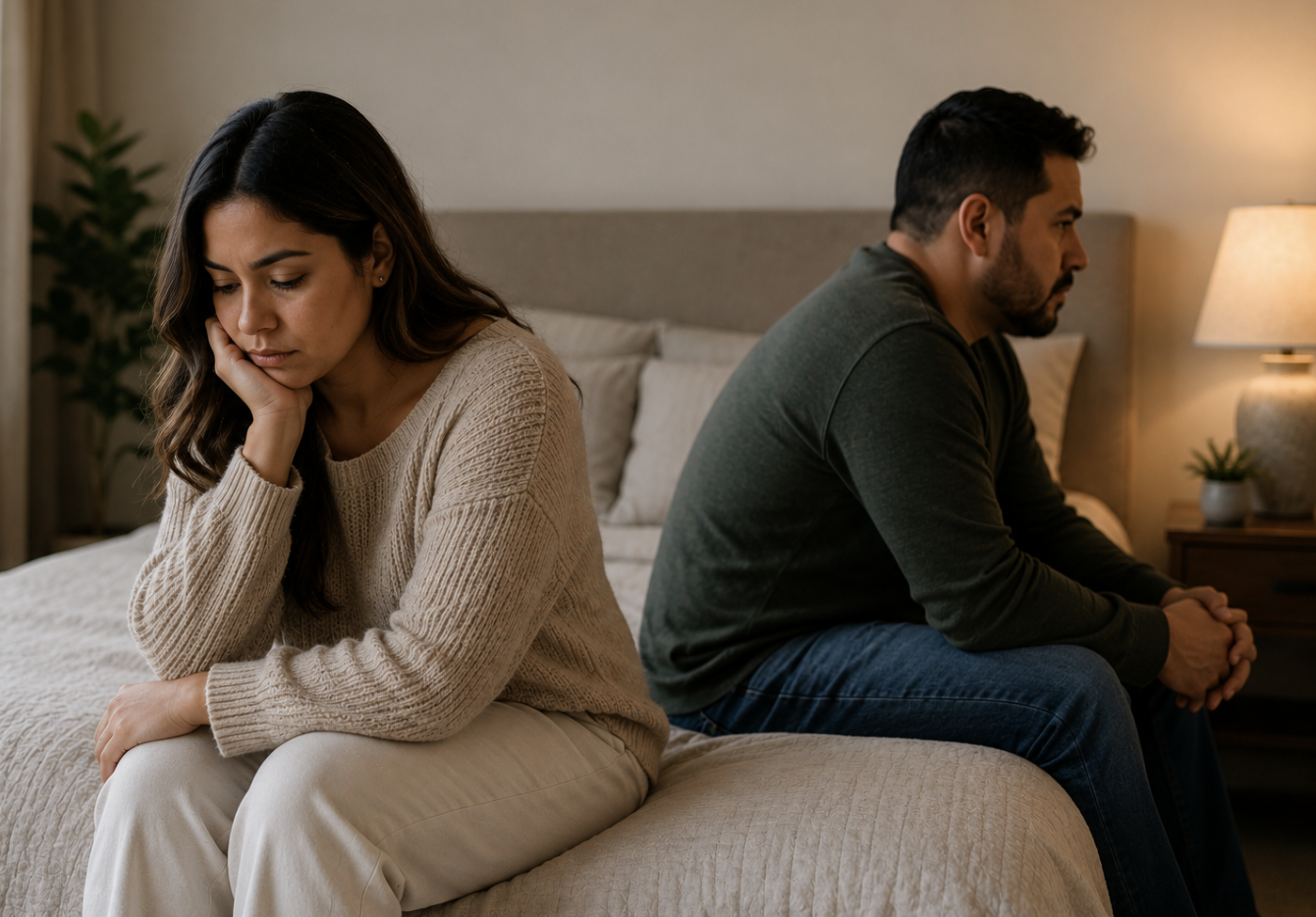
Why Do I Feel Lonely in My Marriage? Understanding Emotional Loneliness
You can share a home, sleep in the same bed, raise children together, attend church together, and still feel profoundly lonely in your marriage.
That kind of loneliness can be confusing.
You may find yourself wondering:
“How can I feel this alone when I’m married?”
Feeling lonely in a marriage does not necessarily mean that you no longer love each other or that your relationship is destined to end. Often, loneliness develops when emotional connection gradually decreases. Stress, unresolved conflict, busy schedules, parenting, hurt, communication patterns, or simply years of operating on autopilot can create distance between two people who still care deeply about one another.
The important question isn’t simply “Are we having problems?”
It’s:
“What has happened to our connection, and are we both willing to work toward rebuilding it?”
For many couples, emotional intimacy can be strengthened when both partners are willing to understand what has created the distance and intentionally work toward reconnecting.
What Is Emotional Loneliness in Marriage?
Emotional loneliness occurs when you don’t feel emotionally known, understood, supported, or connected to your spouse.
This is different from physically being alone.
You may spend considerable time with your spouse and still feel as though they don’t really know what’s happening inside of you.
Emotional loneliness may sound like:
- “We talk, but we don’t really talk.”
- “Everything is about the kids, work, or bills.”
- “I don’t feel like I can tell my spouse how I really feel.”
- “I miss how close we used to be.”
- “We’re more like roommates.”
- “I don’t feel understood.”
- “I feel like I’m carrying everything by myself.”
Sometimes there isn’t one dramatic event that caused the disconnection. The distance accumulated slowly.
Why Do I Feel Lonely Even Though I’m Married?
There isn’t one universal cause.
Emotional loneliness can develop when a relationship stops providing enough opportunities for emotional connection.
Common contributors include:
- Chronic stress
- Parenting demands
- Work responsibilities
- Unresolved disagreements
- Resentment
- Lack of meaningful conversation
- Different communication styles
- Emotional avoidance
- Trust injuries
- Loss of affection
- Grief or major life transitions
- Different expectations about emotional intimacy
- Repeated negative relationship patterns
Sometimes both spouses feel lonely but respond to that loneliness very differently.
One person may seek more conversation and reassurance while the other becomes quiet or withdrawn.
This can create a cycle in which the more one partner pursues connection, the more the other retreats—and the more the other retreats, the harder the first partner pursues.
Eventually, both people may feel misunderstood.
What Are Signs of Emotional Loneliness in a Marriage?
Emotional loneliness doesn’t always look like constant fighting.
In fact, some emotionally disconnected couples rarely argue.
Possible signs include:
1. Most conversations are logistical
You communicate about appointments, children, groceries, work, finances, and responsibilities—but rarely discuss what you’re thinking or feeling.
2. You stop sharing things with your spouse
Something happens during your day and your spouse is no longer the first person you want to tell.
3. You feel misunderstood
You may feel as though your spouse hears your words without understanding what you’re actually trying to communicate.
4. Affection has decreased
Hugs, hand-holding, touching, laughing together, and other small expressions of affection may happen less frequently.
5. You feel more like roommates than partners
Your household may function efficiently while the emotional relationship underneath it feels neglected.
6. You avoid difficult conversations
You may think:
“There’s no point bringing it up.”
Avoiding conflict can create temporary peace while allowing emotional distance to grow.
7. You miss your spouse—even when they’re sitting beside you
This can be one of the clearest signs of emotional loneliness.
You’re not necessarily missing their physical presence.
You’re missing connection.
Are We Growing Apart, or Is This Just a Difficult Season?
Every marriage experiences seasons when connection feels easier and seasons when it requires more intentional effort.
Parenthood, illness, grief, demanding careers, caregiving, financial stress, moving, and other major life transitions can temporarily change the emotional rhythm of a marriage.
Temporary distance isn’t necessarily evidence that your marriage is failing.
The greater concern is when emotional distance becomes the normal pattern and neither partner knows how to change it.
Ask yourself:
- Do we still enjoy spending time together?
- Can we discuss difficult things safely?
- Do I feel emotionally known by my spouse?
- Do we show affection?
- Do we repair things after conflict?
- Are we curious about each other’s lives?
- Do we still imagine our future together?
- Are both of us willing to work on our relationship?
That final question matters.
Relationships are difficult to repair when only one person is consistently doing the emotional work.
How Negative Relationship Cycles Create Loneliness
Couples often assume their spouse is the problem.
But sometimes the real enemy is the cycle the couple has developed together.
Consider this pattern:
Partner A feels disconnected → asks for more attention → Partner B feels criticized → withdraws → Partner A feels rejected → pursues harder → Partner B withdraws further.
Neither person necessarily intends to hurt the other.
Both may actually be trying to protect themselves.
Yet the pattern creates exactly what neither person wants: more distance.
Recognizing the cycle allows couples to shift from:
“You are the problem.”
to:
“This pattern is hurting us. How do we change it together?”
That shift can be powerful.
What Not to Do When You Feel Lonely in Your Marriage
Feeling disconnected can create fear, frustration, and resentment. Those emotions are understandable, but some responses can deepen the divide.
Don’t Lead With Blame
There is a significant difference between:
“You never care about me anymore.”
and:
“I’ve been feeling disconnected from you lately, and I miss us.”
One invites defensiveness.
The other invites conversation.
Don’t Expect Your Spouse to Read Your Mind
You may believe:
“If they really loved me, they would know what I need.”
But even loving partners cannot consistently anticipate unspoken needs.
Healthy relationships require communicating needs clearly.
Don’t Keep Score
Marriage becomes dangerous territory when every interaction becomes an accounting exercise:
“I did this, so you should do that.”
Healthy relationships require reciprocity, but constant scorekeeping can create resentment rather than connection.
Don’t Threaten Separation or Divorce During Arguments
Using divorce as leverage during conflict can damage emotional security.
If separation or divorce is genuinely being considered, that deserves a thoughtful and serious conversation, not a threat made during an argument.
Don’t Seek Emotional Intimacy Somewhere Else
When someone feels lonely in marriage, attention from another person can feel especially powerful.
A friendship can gradually become the place where you share your fears, dreams, disappointments, and emotional needs.
That’s how emotional affairs sometimes begin.
If your marriage feels lonely, address the loneliness directly rather than creating another relationship that makes repairing the marriage more complicated.
How Do I Tell My Spouse I’m Lonely Without Starting a Fight?
Choose a calm moment rather than bringing it up during an argument.
Then talk about your experience rather than your spouse’s failures.
You might say:
“I’ve realized I’ve been feeling lonely lately. I’m not saying you’re a bad spouse. I miss feeling close to you, and I’d really like us to figure out how we can reconnect.”
Then stop.
Give your spouse an opportunity to respond.
The goal of the first conversation isn’t to solve your entire marriage.
It’s to begin understanding each other again.
How Can Couples Rebuild Emotional Intimacy?
Emotional intimacy usually isn’t restored through one dramatic conversation.
It develops through repeated experiences of being emotionally available to one another.
Start Having Conversations That Aren’t About Responsibilities
Ask questions such as:
- What has been weighing on you lately?
- What are you looking forward to?
- What has been stressful recently?
- Is there anything you wish I understood better?
- What do you miss about us?
- When have you felt closest to me recently?
Then listen.
Don’t immediately defend yourself or solve the problem.
Sometimes your spouse needs to feel understood before anything can change.
Create Small Opportunities for Connection
Connection doesn’t always require elaborate date nights.
It might look like:
- Taking a walk together
- Having coffee without phones
- Sitting together after the children go to bed
- Praying together
- Hugging when you arrive home
- Checking in during the day
- Expressing appreciation
- Laughing together
- Asking about something important to your spouse
Small moments repeated consistently can matter more than occasional grand gestures.
Learn to Repair After Conflict
Healthy couples still disagree.
The difference is that they learn how to come back together afterward.
Repair may involve:
- Taking responsibility
- Apologizing
- Clarifying what you meant
- Acknowledging your spouse’s feelings
- Asking what they needed in that moment
- Forgiving
- Trying the conversation again
The goal isn’t a conflict-free marriage.
It’s a marriage in which conflict doesn’t permanently destroy connection.
What Does the Bible Say About Loneliness in Marriage?
Scripture presents marriage as a relationship characterized by companionship, mutual care, humility, patience, and love.
Ecclesiastes 4:9–10 reminds us:
“Two are better than one… If either of them falls down, one can help the other up.”
Marriage isn’t simply about sharing responsibilities. It involves walking through life together.
James 1:19 also provides practical wisdom for relationships:
“Everyone should be quick to listen, slow to speak and slow to become angry.”
Sometimes one of the most loving things we can do for our spouse is listen without immediately defending ourselves.
And Ephesians 4:2 encourages believers to:
“Be completely humble and gentle; be patient, bearing with one another in love.”
Christian marriage does not require pretending that everything is fine.
Grace, humility, forgiveness, honesty, and healthy communication can coexist.
Does Being a Christian Mean My Marriage Shouldn’t Feel Lonely?
No.
Christians experience the same relationship difficulties experienced by other couples.
Faith can provide important sources of meaning, hope, forgiveness, community, and guidance, but being a Christian does not automatically prevent:
- Communication problems
- Attachment wounds
- Emotional disconnection
- Resentment
- Trauma
- Stress
- Mental health challenges
- Marital conflict
Struggling in your marriage does not automatically mean you’ve failed spiritually.
Sometimes faith and professional counseling can work alongside one another as couples seek healing.
Can Couples Counseling Help With Emotional Disconnection?
Couples counseling can help partners better understand the patterns contributing to emotional distance.
Depending on the couple’s needs, counseling may focus on:
- Improving communication
- Identifying negative relationship cycles
- Understanding attachment patterns
- Increasing emotional responsiveness
- Rebuilding trust
- Processing unresolved hurt
- Developing healthier conflict skills
- Strengthening emotional intimacy
Research on evidence-based approaches to couples therapy, including Emotionally Focused Therapy and behavioral couple interventions, has found that many couples can experience meaningful improvements in relationship satisfaction and functioning.
However, couples counseling is not about forcing two people to remain together at all costs.
The process works best when both partners are willing to participate honestly and examine their contribution to the relationship.
In most cases, a 4-hour couples intensive may be the best next step. Read more about couples intensives here.
When Should We Consider Couples Counseling?
You don’t have to wait until you’re discussing divorce.
Consider seeking support when:
- You repeatedly have the same arguments.
- One partner frequently shuts down.
- You feel emotionally disconnected.
- Trust has been damaged.
- Affection has significantly decreased.
- Resentment continues growing.
- You feel more like roommates.
- Conversations quickly become defensive.
- You’ve tried reconnecting but keep returning to the same patterns.
Seeking counseling earlier can give couples an opportunity to address unhealthy patterns before they become deeply established.
Feeling Lonely Doesn’t Automatically Mean Your Marriage Is Over
Feeling lonely in marriage can be painful.
But loneliness is information.
It may be telling you that something important in the relationship needs attention.
For some couples, that realization becomes the beginning of an important conversation:
“We’ve become disconnected. We don’t want to stay here. What do we need to do differently?”
If both partners are willing to listen, take responsibility, become emotionally available, and work toward change, connection can often be strengthened.
At Therapy Terrace Counseling Center, we provide virtual couples counseling throughout Florida for couples who want to better understand their relationship patterns, improve communication, rebuild emotional connection, and explore healthier ways of relating to one another.
Our approach combines evidence-based clinical practices with Christian faith integration for clients who desire it.
Frequently Asked Questions
Why do I feel lonely even though I’m married?
You can feel lonely in marriage when physical proximity exists without enough emotional connection. Stress, unresolved conflict, lack of meaningful conversation, resentment, different attachment patterns, and busy schedules can all contribute to emotional loneliness.
Is feeling lonely in marriage normal?
Many couples experience periods of emotional disconnection, particularly during stressful seasons. Occasional loneliness does not necessarily indicate that a marriage is unhealthy. Persistent loneliness, however, may signal that the relationship needs more intentional attention.
Does feeling lonely mean I don’t love my spouse anymore?
Not necessarily. You can love your spouse deeply and still feel emotionally disconnected. Loneliness often reflects an unmet need for connection rather than an absence of love.
Can a marriage recover from emotional distance?
Many couples can strengthen emotional intimacy when both partners recognize the disconnection and are willing to work on communication, responsiveness, trust, and relationship patterns.
How can I reconnect with my spouse emotionally?
Start with small, consistent changes. Have conversations that go beyond household responsibilities, listen without immediately becoming defensive, express appreciation, create distraction-free time together, show affection, and discuss what each of you needs to feel connected.
What if my spouse doesn’t want couples counseling?
You cannot force someone to participate meaningfully in counseling. Individual counseling may still help you understand your own relationship patterns, boundaries, communication style, and options while you determine your next steps.
Can Christian couples counseling help a disconnected marriage?
Christian couples counseling can integrate evidence-based relationship interventions with biblical principles such as grace, honesty, forgiveness, humility, commitment, and mutual care. Faith integration should complement sound clinical care rather than replace it.
When is couples counseling not appropriate?
Certain situations require additional assessment before traditional couples counseling, particularly when there is ongoing abuse, coercive control, or significant safety concerns. Safety should take priority over preserving the relationship.
Therapy Terrace is a virtual Christian counseling practice serving clients throughout Florida, including Miami, Orlando, Tampa, Jacksonville, Fort Lauderdale, St. Petersburg, Tallahassee, West Palm Beach, Naples, Sarasota, and surrounding communities.
Our Services
- Individual Counseling
- Christian couples counseling
- 4-hour marriage intensives
- Premarital counseling
- Anxiety and stress support
- Relationship and communication counseling
- Teen counseling