
How Childhood Trauma Shows Up in Adult Relationships: 7 Signs You May Not Recognize
You love your partner, but the smallest disagreement can suddenly feel enormous.
A delayed text makes you wonder if something is wrong.
Criticism feels deeply personal.
You shut down during conflict, become afraid someone will leave, struggle to trust people who haven’t given you a reason not to, or find yourself constantly trying to keep everyone happy.
Sometimes these reactions aren’t just about what’s happening in your relationship today.
They may be connected to what you learned about safety, love, trust, and relationships much earlier in life.
Childhood trauma can affect adult relationships by influencing attachment, emotional regulation, trust, boundaries, communication, and the way a person responds to perceived rejection or conflict.
At Therapy Terrace, we provide virtual Christian counseling throughout Florida for individuals working through trauma, anxiety, attachment concerns, and unhealthy relationship patterns.
Understanding where a pattern came from doesn’t excuse unhealthy behavior. But it can help you understand what needs to change.
What Is Childhood Trauma?
Childhood trauma can result from experiences that overwhelmed a child’s ability to feel safe, secure, or supported.
Some forms of childhood trauma are obvious.
Others are much easier to overlook.
Experiences that may have a lasting emotional impact include:
- Physical abuse
- Sexual abuse
- Emotional abuse
- Neglect
- Domestic violence in the home
- Loss of a parent or caregiver
- Parental substance abuse
- Unpredictable caregiving
- Chronic family conflict
- Abandonment
- Bullying
- Serious illness
- Repeated instability
- Growing up around intense anger or fear
Not everyone who experiences adversity during childhood develops long-term trauma symptoms.
People respond differently depending on many factors, including the experience itself, its duration, their developmental stage, available support, and what happened afterward.
The important question isn’t simply:
“Was my childhood bad enough to count?”
A more useful question may be:
“What did my early experiences teach me about myself, other people, and relationships?”
How Does Childhood Trauma Affect Adult Relationships?
Our earliest relationships can influence what we learn about closeness, safety, trust, conflict, and vulnerability.
If relationships during childhood were generally safe and predictable, you may have learned that people can be trusted and that conflict doesn’t necessarily threaten connection.
If relationships were frightening, inconsistent, neglectful, or unpredictable, you may have learned very different lessons.
You may have learned:
- People leave.
- Love has to be earned.
- Conflict means danger.
- My needs are a burden.
- I need to keep everyone happy.
- I can’t depend on anyone.
- I need to stay alert.
- Being vulnerable isn’t safe.
These beliefs can follow someone into adulthood even when their current relationship is very different from the relationships they experienced growing up.
Here are seven ways those patterns may appear.
1. You Have a Strong Fear of Abandonment
A partner becoming quiet, needing space, or taking longer than usual to respond may trigger intense anxiety.
Your mind immediately goes to:
“Are they leaving?”
“Are they mad at me?”
“Did I do something wrong?”
You may seek reassurance repeatedly, become distressed when your partner wants space, or interpret ordinary distance as rejection.
For some people, this fear is connected to earlier experiences of abandonment, inconsistent caregiving, loss, or relationships in which affection felt unpredictable.
The current situation may be relatively small.
But your emotional response can feel much bigger because your nervous system isn’t responding only to the present moment.
2. You Struggle to Trust People
Childhood trauma can sometimes create the belief that closeness isn’t safe.
You may genuinely want intimacy while simultaneously expecting betrayal.
That can look like:
- Questioning someone’s motives
- Expecting relationships to end
- Difficulty believing reassurance
- Keeping emotional walls up
- Looking for signs that something is wrong
- Feeling uncomfortable depending on another person
- Assuming you’ll eventually be hurt
Sometimes people protect themselves by never fully trusting anyone.
The problem is that the protection that prevents hurt can also prevent intimacy.
3. You Shut Down During Conflict
Not everyone responds to relationship stress by arguing.
Some people become silent.
You may suddenly feel unable to speak, leave the conversation, emotionally disconnect, or feel completely overwhelmed during disagreement.
If conflict during childhood involved yelling, violence, unpredictability, humiliation, or emotional withdrawal, your nervous system may have learned:
Conflict isn’t safe.
As an adult, even a relatively healthy disagreement can activate that old alarm system.
Learning to remain emotionally present during conflict can be an important part of healing.
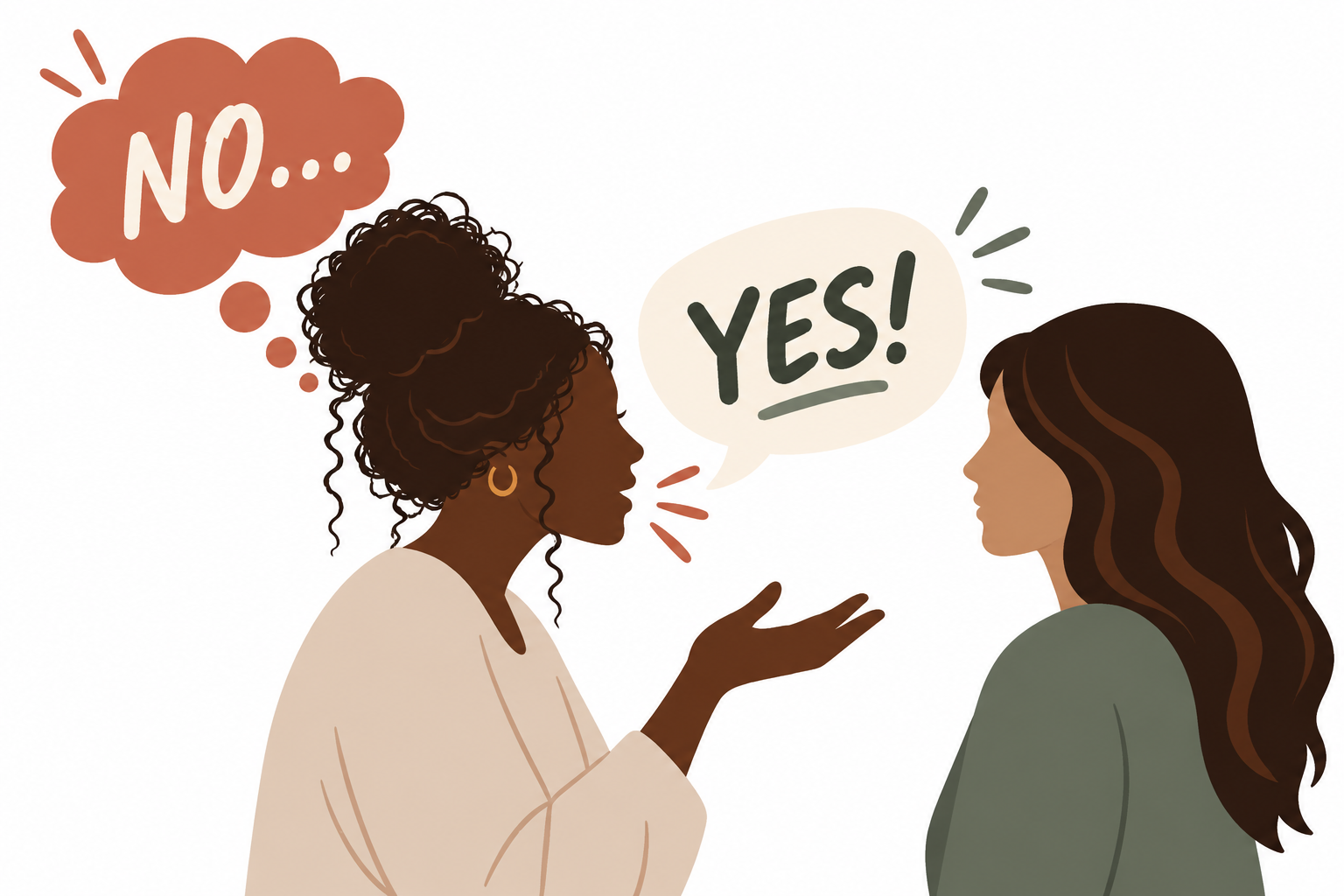
4. You Become a People-Pleaser
If keeping other people happy helped maintain peace when you were younger, people-pleasing may have become a survival strategy.
As an adult, you may:
- Say yes when you want to say no
- Avoid expressing disagreement
- Apologize excessively
- Feel responsible for your partner’s mood
- Ignore your own needs
- Struggle to establish boundaries
- Become anxious when someone is disappointed with you
Eventually, relationships can become exhausting because you’re constantly monitoring everyone else’s emotions.
Healthy relationships require room for both people’s needs.
You shouldn’t have to disappear in order to stay connected.
5. You Are Extremely Sensitive to Rejection
A small change in someone’s tone can feel significant.
A disagreement may feel like rejection.
Constructive criticism may feel like confirmation that you’re inadequate.
A partner asking for space may feel like abandonment.
This doesn’t necessarily mean you’re “too sensitive.”
Sometimes your brain has simply become highly skilled at detecting potential threats to relationships.
That sensitivity may once have been useful.
If you grew up needing to pay attention to someone’s mood to know whether you were safe, noticing tiny changes became important.
In adulthood, however, that same vigilance can create anxiety in relationships that are actually safe.
6. You Struggle With Boundaries
Childhood experiences can shape your understanding of what you’re allowed to need.
If your boundaries weren’t respected growing up, you may struggle to recognize or communicate them now.
You might:
- Feel guilty saying no
- Overexplain your decisions
- Allow behavior that makes you uncomfortable
- Feel responsible for solving other people’s problems
- Give more than you realistically have
- Have difficulty asking for space
- Feel selfish when prioritizing yourself
Healthy boundaries don’t mean pushing everyone away.
They help define where you end and another person begins.
7. You Keep Repeating Painful Relationship Patterns
One of the most confusing effects of unresolved childhood experiences is repeatedly finding yourself in familiar relationship dynamics.
You may be drawn to:
- Emotionally unavailable partners
- Relationships where you must earn affection
- Partners who require rescuing
- High-conflict relationships
- Relationships where your needs are consistently secondary
This does not mean people consciously choose unhealthy relationships because they enjoy being hurt.
Sometimes familiar relationship dynamics simply feel easier to recognize.
Familiarity, however, is not the same thing as safety.
Therapy can help you identify recurring patterns and begin making different choices.
Childhood Trauma and Attachment Styles
Attachment describes patterns related to closeness, security, independence, and connection in relationships.
Early experiences can influence these patterns, although attachment is not permanently fixed in childhood.
Some adults become highly anxious about relationships and fear abandonment.
Others become uncomfortable with emotional closeness and rely heavily on independence.
Some experience both: desperately wanting connection while simultaneously becoming uncomfortable when someone gets too close.
Understanding your attachment patterns can help explain why certain situations trigger strong emotional reactions.
But attachment style shouldn’t become another label you use against yourself or your partner.
The goal is understanding the pattern so you can change it.
Why Do I Get Triggered So Easily in Relationships?
A trigger occurs when something in the present activates an emotional response connected to previous experiences.
Your partner may say:
“We need to talk.”
To them, it means exactly that.
Your nervous system may hear:
“Something terrible is about to happen.”
You may immediately experience:
- Racing thoughts
- Increased heart rate
- Anger
- Panic
- Defensiveness
- An urge to leave
- An urge to fix everything immediately
- Emotional shutdown
The emotional reaction is real.
But the intensity of the reaction may not always match the current situation.
Learning to recognize the difference between what is happening now and what your body expects to happen based on the past can be an important part of trauma recovery.
Can Childhood Trauma Cause Trust Issues?
Childhood trauma can contribute to difficulty trusting others, particularly when the people responsible for providing safety were also unpredictable, neglectful, frightening, or unavailable.
But trust issues can have many causes.
Adult betrayal, infidelity, abusive relationships, grief, attachment experiences, and other life events can also affect someone’s ability to trust.
Rather than assuming every trust issue comes from childhood, therapy can help identify the experiences and beliefs contributing to your specific pattern.
Childhood Trauma, Anxiety, and Overthinking
Trauma can also contribute to anxiety and overthinking in relationships.
You may replay conversations repeatedly:
“Did I say something wrong?”
“Why did they respond like that?”
“Are they losing interest?”
“Should I text them again?”
Overthinking can create the illusion that if you analyze the situation long enough, you’ll eventually eliminate uncertainty.
Usually, you don’t.
You simply become more anxious.
Learning to tolerate uncertainty while responding to what is actually happening—rather than everything that could happen—is an important skill in healthier relationships.
Childhood Trauma and Emotional Intimacy
Emotional intimacy requires vulnerability.
And vulnerability requires some degree of safety.
For someone who learned that vulnerability led to rejection, criticism, neglect, or harm, opening up can feel dangerous.
You may:
- Avoid difficult conversations
- Minimize your emotions
- Say “I’m fine” when you’re not
- Struggle to ask for help
- Feel uncomfortable receiving support
- Keep parts of yourself hidden
- Pull away when relationships become emotionally close
Sometimes the person who appears fiercely independent isn’t avoiding connection because they don’t want it.
They may have learned not to depend on anyone.
A Christian Perspective on Childhood Trauma and Healing
Christians sometimes struggle with trauma because they believe healing should happen faster.
You may have heard:
“Just forgive.”
“You need to let it go.”
“Everything happens for a reason.”
“You just need more faith.”
Those statements can oversimplify deeply painful experiences.
Forgiveness and emotional healing are not necessarily the same process.
And acknowledging that something hurt you does not mean you’re refusing to forgive.
Christian counseling can create room for both psychological healing and spiritual questions.
You may need to explore:
- Anger
- Grief
- Forgiveness
- Boundaries
- Trust
- Identity
- Shame
- Your understanding of God
- What healthy relationships should look like
Faith doesn’t require pretending the past didn’t hurt.
Healing often begins with telling the truth about what happened and understanding how it affected you.
How to Heal Childhood Trauma in Relationships
Healing does not mean forgetting your childhood or blaming your parents for every problem in your adult life.
It means recognizing what you learned and deciding what you want to carry forward.
Healing may involve:
Recognizing your triggers
Notice which situations create unusually intense emotional reactions.
Learning emotional regulation
Develop skills for calming your body before reacting.
Challenging old beliefs
Ask whether beliefs such as “everyone leaves” or “my needs don’t matter” are still serving you.
Developing healthy boundaries
Learn that saying no doesn’t automatically threaten connection.
Practicing healthier communication
Express what you’re feeling instead of expecting your partner to guess.
Learning to tolerate healthy conflict
Disagreement doesn’t automatically mean abandonment.
Allowing safe people to be safe
Past relationships may have taught you to expect harm.
Healing includes learning to evaluate current relationships based on current evidence.
Can Therapy Help With Childhood Trauma?
Yes.
Trauma therapy can help you understand how earlier experiences may be affecting your present-day emotions, behaviors, and relationships.
Therapy may help with:
- Trauma symptoms
- Anxiety
- Relationship triggers
- Attachment concerns
- People-pleasing
- Trust issues
- Boundaries
- Shame
- Emotional regulation
- Communication
- Fear of abandonment
- Self-esteem
The goal isn’t to spend therapy endlessly analyzing your childhood.
The goal is understanding enough about the past that it stops controlling the present.
Virtual Trauma Therapy in Florida
Therapy Terrace is a virtual-only Christian counseling practice serving clients throughout Florida.
Our therapists work with individuals experiencing trauma, anxiety, attachment difficulties, relationship concerns, shame, people-pleasing, and other emotional challenges.
Virtual counseling allows you to receive therapy privately from your own space while working with a clinician licensed to provide services in Florida.
For clients who desire it, Christian faith can also be thoughtfully incorporated into the counseling process.
Frequently Asked Questions About Childhood Trauma and Relationships
How does childhood trauma affect adult relationships?
Childhood trauma can influence trust, attachment, communication, emotional regulation, boundaries, vulnerability, and responses to conflict. The effects vary considerably from person to person.
What are signs that childhood trauma is affecting my relationship?
Possible signs include fear of abandonment, difficulty trusting, shutting down during conflict, people-pleasing, difficulty setting boundaries, strong reactions to rejection, and repeatedly experiencing unhealthy relationship patterns.
Can childhood trauma cause fear of abandonment?
It can contribute to fear of abandonment, particularly when childhood involved loss, inconsistent caregiving, rejection, or instability. However, fear of abandonment can also develop from later experiences.
Why do I shut down during arguments?
Some people shut down when conflict activates an intense stress response. Earlier experiences with frightening or unpredictable conflict can contribute to this pattern, although there may be other causes.
Can childhood trauma cause relationship anxiety?
Childhood trauma can contribute to relationship anxiety by affecting a person’s expectations about trust, safety, rejection, and abandonment.
Can childhood trauma cause people-pleasing?
For some people, yes. If being agreeable or anticipating other people’s needs helped reduce conflict or maintain safety during childhood, the pattern may continue into adulthood. Not all people-pleasing, however, is caused by trauma.
Can childhood trauma affect attachment?
Early relationships can influence attachment patterns and expectations about closeness and safety. Attachment patterns can also change through later relationships, self-awareness, and therapy.
Can therapy help childhood trauma that happened years ago?
Yes. Therapy can help adults understand and process earlier experiences, recognize present-day triggers, develop emotional regulation skills, establish healthier boundaries, and change relationship patterns.
Your Past Can Explain a Pattern Without Determining Your Future
Childhood trauma may help explain why certain situations feel so intense.
It may explain why you fear abandonment.
Why you struggle to trust.
Why you automatically say yes.
Why conflict makes you shut down.
Or why vulnerability feels frightening.
Understanding those connections isn’t about blaming your past for everything happening today.
It’s about gaining enough awareness to make different choices now.
You can learn healthier boundaries.
You can communicate differently.
You can experience conflict without automatically expecting abandonment.
And you can build relationships that aren’t organized around survival.
If childhood trauma, anxiety, attachment concerns, or relationship patterns are affecting your life, Therapy Terrace provides virtual Christian trauma counseling throughout Florida.
Contact Therapy Terrace to schedule a consultation and learn whether one of our therapists may be a good fit.
Therapy Terrace is a virtual Christian counseling practice serving clients throughout Florida, including Miami, Orlando, Tampa, Jacksonville, Fort Lauderdale, St. Petersburg, Tallahassee, West Palm Beach, Naples, Sarasota, and surrounding communities.
Our Services
- Individual Counseling
- Christian couples counseling
- 4-hour marriage intensives
- Premarital counseling
- Anxiety and stress support
- Relationship and communication counseling
- Teen counseling