
Attachment Styles and Relationships: How Your Past May Be Affecting Your Present
Why Do I Pull Away, Cling Too Tightly, or Fear Conflict?
Have you ever wondered why some people seem comfortable with closeness while others struggle with trust, fear abandonment, avoid vulnerability, or feel overwhelmed during conflict?
The answer may lie in your attachment style.
Attachment styles are patterns of relating to others that often develop early in life and can influence how we experience friendships, dating relationships, marriage, and family connections. Understanding your attachment style can help you recognize unhealthy patterns, improve communication, and build healthier, more secure relationships.
At Therapy Terrace Counseling Center, we help individuals and couples understand attachment patterns and develop healthier ways of connecting with the people they love.
What Is Attachment Theory?
Attachment Theory was originally developed by psychologist John Bowlby and later expanded by researcher Mary Ainsworth. The theory suggests that our early experiences with caregivers influence how we view relationships, trust, emotional safety, and connection throughout life.
While attachment styles often begin in childhood, they can continue to affect adult relationships. The encouraging news is that attachment patterns are not permanent. Through self-awareness, healthy relationships, and counseling, people can develop more secure ways of connecting.
The Four Main Attachment Styles
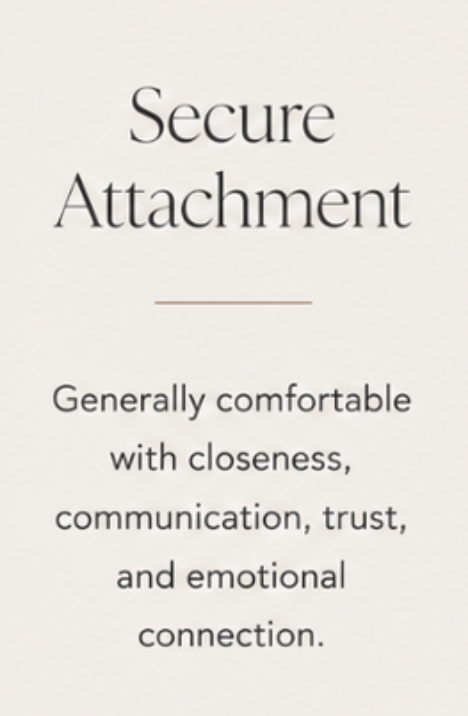
Secure Attachment
People with a secure attachment style generally feel comfortable with both intimacy and independence.
Characteristics may include:
- Trusting others
- Healthy communication
- Emotional openness
- Ability to manage conflict constructively
- Comfort with both closeness and personal space
- Confidence in relationships
Securely attached individuals understand that disagreements and challenges do not automatically threaten the relationship.
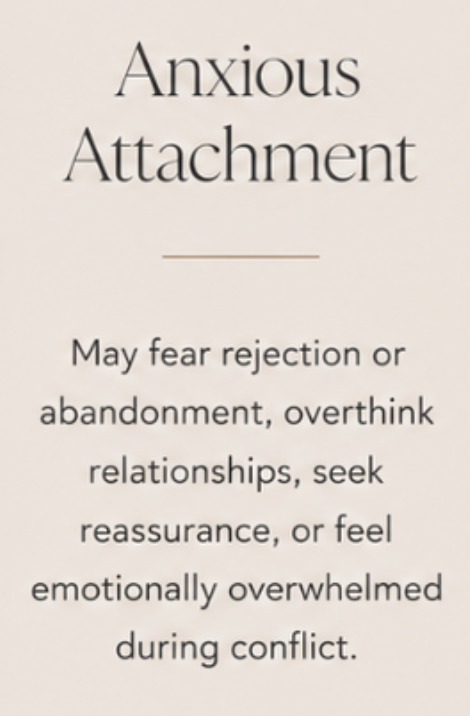
Anxious Attachment
People with an anxious attachment style often desire closeness but may worry about rejection, abandonment, or losing the relationship.
Common signs include:
- Seeking frequent reassurance
- Overthinking interactions
- Fear of being left behind
- Sensitivity to changes in communication
- Difficulty feeling secure in relationships
- Strong emotional reactions during conflict
Individuals with anxious attachment are often deeply caring and relationship-focused but may struggle with fears that others will leave or stop caring.
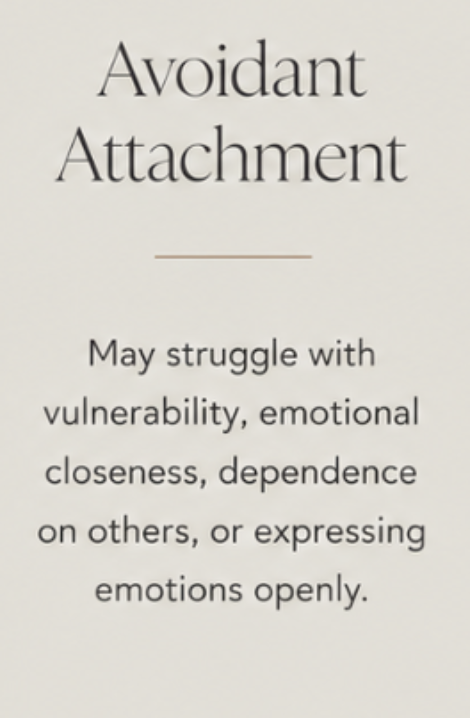
Avoidant Attachment
People with avoidant attachment often value independence and self-reliance but may struggle with vulnerability and emotional closeness.
Common signs include:
- Difficulty expressing emotions
- Discomfort with dependence
- Pulling away during conflict
- Avoiding vulnerability
- Preference for handling problems alone
- Feeling overwhelmed by emotional demands
While avoidantly attached individuals often care deeply about others, they may struggle to let others see their emotional needs.
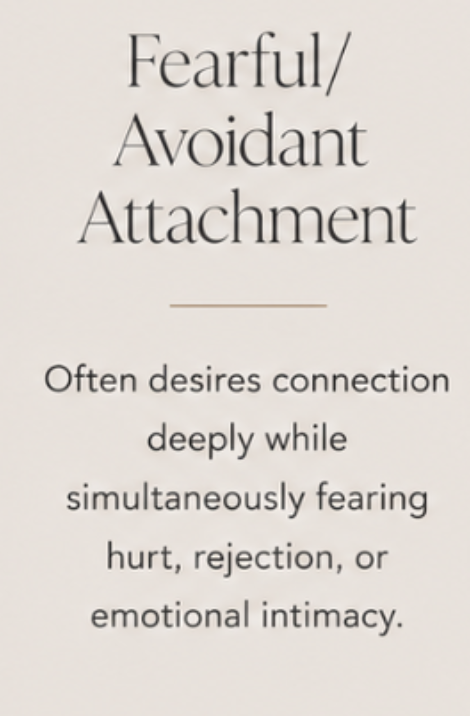
Fearful / Avoidant Attachment
Sometimes called disorganized attachment, fearful-avoidant individuals often desire connection while simultaneously fearing it.
Common signs include:
- Fear of rejection
- Difficulty trusting others
- Mixed signals in relationships
- Strong desire for closeness
- Pulling away when intimacy increases
- Emotional highs and lows
This attachment style can create confusion because individuals often want connection but fear being hurt.
How Attachment Styles Affect Relationships
Attachment styles influence how we:
- Communicate
- Handle conflict
- Express affection
- Respond to stress
- Build trust
- Set boundaries
- Experience intimacy
- Interpret our partner's behavior
For example:
An anxious partner may seek reassurance when stressed.
An avoidant partner may withdraw when stressed.
Without understanding attachment styles, these responses can create a cycle where both partners feel misunderstood.
Can Attachment Styles Change?
Yes.
Research suggests that attachment styles are not fixed for life. People can develop greater security through:
- Self-awareness
- Counseling
- Healthy relationships
- Emotional healing
- Improved communication skills
- Corrective relationship experiences
Many people move toward secure attachment as they gain insight into their patterns and learn healthier ways of relating.
What Does the Research Say?
Research consistently shows that secure attachment is associated with:
- Greater relationship satisfaction
- Better communication
- Higher levels of trust
- Healthier conflict resolution
- Increased emotional intimacy
Research also suggests that understanding attachment patterns can help couples reduce conflict and strengthen emotional connection.
Rather than labeling yourself, attachment theory can be used as a tool for growth and self-understanding.
What Not to Do If Attachment Issues Are Affecting Your Relationship
Don't Label or Diagnose Your Partner
Attachment styles should be used to increase understanding, not to criticize or excuse unhealthy behavior.
Instead of saying:
"You're just avoidant."
Try saying:
"I notice that when conflict happens, we seem to respond differently. Can we talk about that?"
Don't Assume Your Attachment Style Defines You
Your attachment style is a pattern, not your identity.
People can learn healthier ways of relating.
Don't Ignore Emotional Triggers
Strong emotional reactions often provide valuable information about underlying fears, wounds, and needs.
Understanding your triggers can help you respond more intentionally.
Don't Expect Your Partner to Read Your Mind
Healthy relationships require direct communication.
Communicating needs clearly creates opportunities for understanding and connection.
Biblical Wisdom and Relationships
Scripture reminds us that healthy relationships are built through love, patience, humility, and grace.
Ephesians 4:2-3
"Be completely humble and gentle; be patient, bearing with one another in love."
James 1:19
"Everyone should be quick to listen, slow to speak and slow to become angry."
Colossians 3:14
"And over all these virtues put on love, which binds them all together in perfect unity."
Faith can provide a powerful foundation for healing, forgiveness, trust, and emotional growth within relationships.
How Counseling Can Help
Counseling can help you:
- Understand your attachment style
- Identify unhealthy relationship patterns
- Improve communication
- Build emotional safety
- Strengthen trust
- Learn healthier conflict resolution skills
- Develop more secure relationships
Whether you are dating, engaged, married, or healing from past relationship experiences, counseling can provide tools and support for meaningful growth.
Curious about your attachment style?
Take the attachment style quiz (Click here)
Understanding yourself is often the first step toward building healthier relationships.
If attachment patterns are creating challenges in your relationships, Therapy Terrace Counseling Center can help.
Our therapists provide evidence-based and faith-integrated counseling to help individuals and couples strengthen communication, build trust, and develop healthier relationships.
Therapy Terrace is a virtual Christian counseling practice serving clients throughout Florida, including Miami, Orlando, Tampa, Jacksonville, Fort Lauderdale, St. Petersburg, Tallahassee, West Palm Beach, Naples, Sarasota, and surrounding communities.
Our Services
- Individual Counseling
- Christian couples counseling
- 4-hour marriage intensives
- Premarital counseling
- Anxiety and stress support
- Relationship and communication counseling
- Teen counseling