
Why Do We Keep Having the Same Argument? Understanding Negative Relationship Cycles
Have you ever found yourself having the same argument with your spouse or partner over and over again?
Maybe the topic changes slightly, but the pattern feels familiar:
- One person wants to talk while the other shuts down.
- One person feels unheard while the other feels criticized.
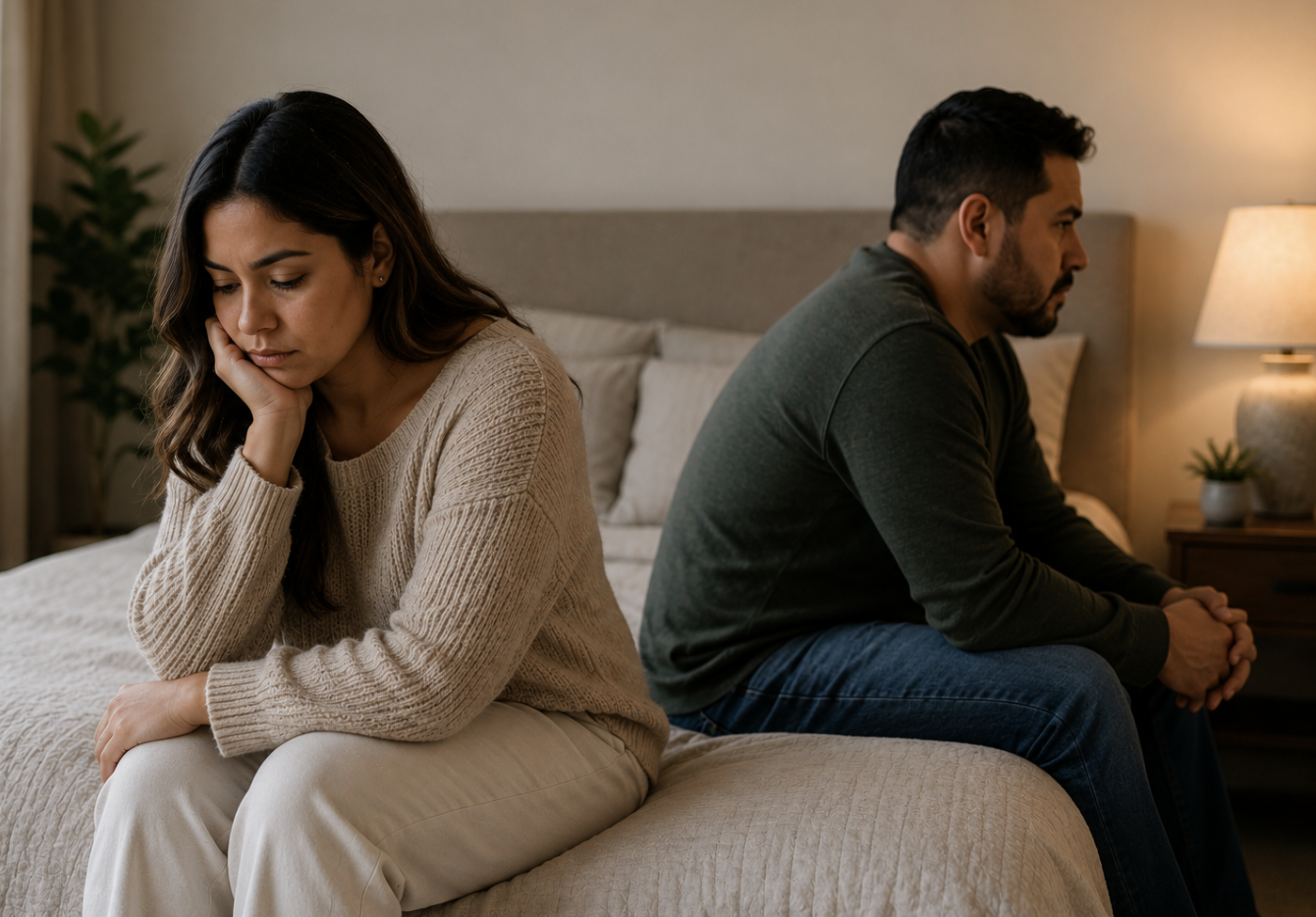
- One person pursues while the other withdraws.
Over time, these repeated arguments can leave couples feeling exhausted, disconnected, and hopeless.
The good news is that many relationship problems are not caused by a lack of love. Instead, couples often become stuck in negative relationship cycles that neither person fully understands.
Understanding these cycles can help couples improve communication, increase emotional safety, and begin moving toward healthier patterns of connection.
What Are Negative Relationship Cycles?
Negative relationship cycles are repetitive patterns of interaction that keep couples stuck in conflict.
Rather than focusing on who is right or wrong, it can be helpful to ask:
“What pattern keeps showing up between us?”
Many couples are surprised to learn that they are not actually fighting about dishes, text messages, finances, or intimacy.
Often, they are fighting about deeper needs such as:
- Feeling important
- Feeling emotionally safe
- Feeling understood
- Feeling appreciated
- Feeling connected
When these needs feel threatened, couples can unintentionally trigger one another.
The Pursuer-Withdrawer Cycle
One of the most common relationship cycles is known as the Pursuer-Withdrawer Cycle.
The Pursuer
The pursuer often:
- Wants to talk immediately
- Seeks reassurance and connection
- Feels anxious when problems are unresolved
- May become critical or persistent when feeling unheard
The Withdrawer
The withdrawer often:
- Needs time to process emotions
- Avoids conflict to reduce stress
- Feels overwhelmed by emotional intensity
- May become quiet or emotionally distant
The more one partner pursues, the more the other withdraws.
The more one withdraws, the more the other pursues.
Eventually, both partners feel misunderstood.
Attachment Styles Can Influence Conflict
Our attachment styles often play a role in how we respond during conflict.
Someone with an anxious attachment style may fear rejection or abandonment and seek closeness during conflict.
Someone with an avoidant attachment style may feel overwhelmed by emotional intensity and pull away.
Neither response is inherently wrong. They are often protective strategies that developed over time.
Understanding these patterns can help couples respond with more compassion and less blame.
What Not to Do During Conflict
Don’t Focus on Winning
Healthy relationships are not about proving who is right.
If one person wins the argument but both people feel disconnected, the relationship loses.
Don’t Assume Intentions
It is easy to assume:
- “They don’t care.”
- “They are ignoring me.”
- “They are trying to control me.”
In reality, your partner may be responding from fear, stress, or feeling overwhelmed.
Don’t Bring Up Every Past Hurt
When arguments become a review of every mistake made over the past ten years, resolution becomes difficult.
Focus on the current issue whenever possible.
Don’t Use Threats
Repeated threats of divorce, separation, or leaving can create insecurity and emotional distance.
What To Do Instead
Become Curious
Ask questions such as:
- “What are you feeling right now?”
- “What do you need from me?”
- “What is this situation bringing up for you?”
Curiosity creates connection.
Learn to Pause
Sometimes couples need a break before continuing difficult conversations.
A pause is different from avoidance.
A healthy pause includes returning to the conversation later.
Communicate Vulnerably
Instead of saying:
“You never listen.”
Try:
“I feel alone when I don’t feel heard.”
Vulnerability often softens defensiveness and increases emotional connection.
Focus on the Cycle, Not the Person
The problem is often not your partner.
The problem is the pattern that both of you become stuck in.
Couples who learn to recognize the cycle can begin working together against the problem instead of against each other.
What Does the Research Say?
Research in relationship science consistently shows that emotional responsiveness, healthy communication, and repair after conflict are strong predictors of relationship satisfaction.
Couples who learn to identify and interrupt negative interaction patterns often experience improvements in:
- Communication
- Trust
- Emotional intimacy
- Conflict resolution
- Relationship satisfaction
Relationships can improve when both partners are willing to understand the cycle and make small, consistent changes.
Biblical Wisdom for Communication
Scripture encourages patience, humility, and understanding in relationships.
James 1:19
“Everyone should be quick to listen, slow to speak and slow to become angry.”
Ephesians 4:2
“Be completely humble and gentle; be patient, bearing with one another in love.”
Proverbs 15:1
“A gentle answer turns away wrath, but a harsh word stirs up anger.”
Healthy communication often begins by slowing down and seeking understanding rather than reacting.
When to Seek Counseling
You may benefit from couples counseling if:
- You keep having the same arguments.
- Communication often leads to conflict.
- One or both partners feel emotionally disconnected.
- You struggle to resolve disagreements.
- Trust has been damaged.
- You feel stuck and unsure how to move forward.
Counseling can help couples identify unhealthy cycles, improve emotional safety, and develop healthier patterns of communication.
There Is Hope
Having the same argument repeatedly does not necessarily mean your relationship is failing.
It may mean that there is an underlying cycle that needs attention.
With greater understanding, healthier communication skills, and support, many couples can learn to break these patterns and create stronger, more connected relationships.
At Therapy Terrace Counseling Center, we help couples understand their relationship dynamics, improve communication, and build healthier connections rooted in both evidence-based practices and faith.
Therapy Terrace is a virtual Christian counseling practice serving clients throughout Florida, including Miami, Orlando, Tampa, Jacksonville, Fort Lauderdale, St. Petersburg, Tallahassee, West Palm Beach, Naples, Sarasota, and surrounding communities.
Our Services
- Individual Counseling
- Christian couples counseling
- 4-hour marriage intensives
- Premarital counseling
- Anxiety and stress support
- Relationship and communication counseling
- Teen counseling